
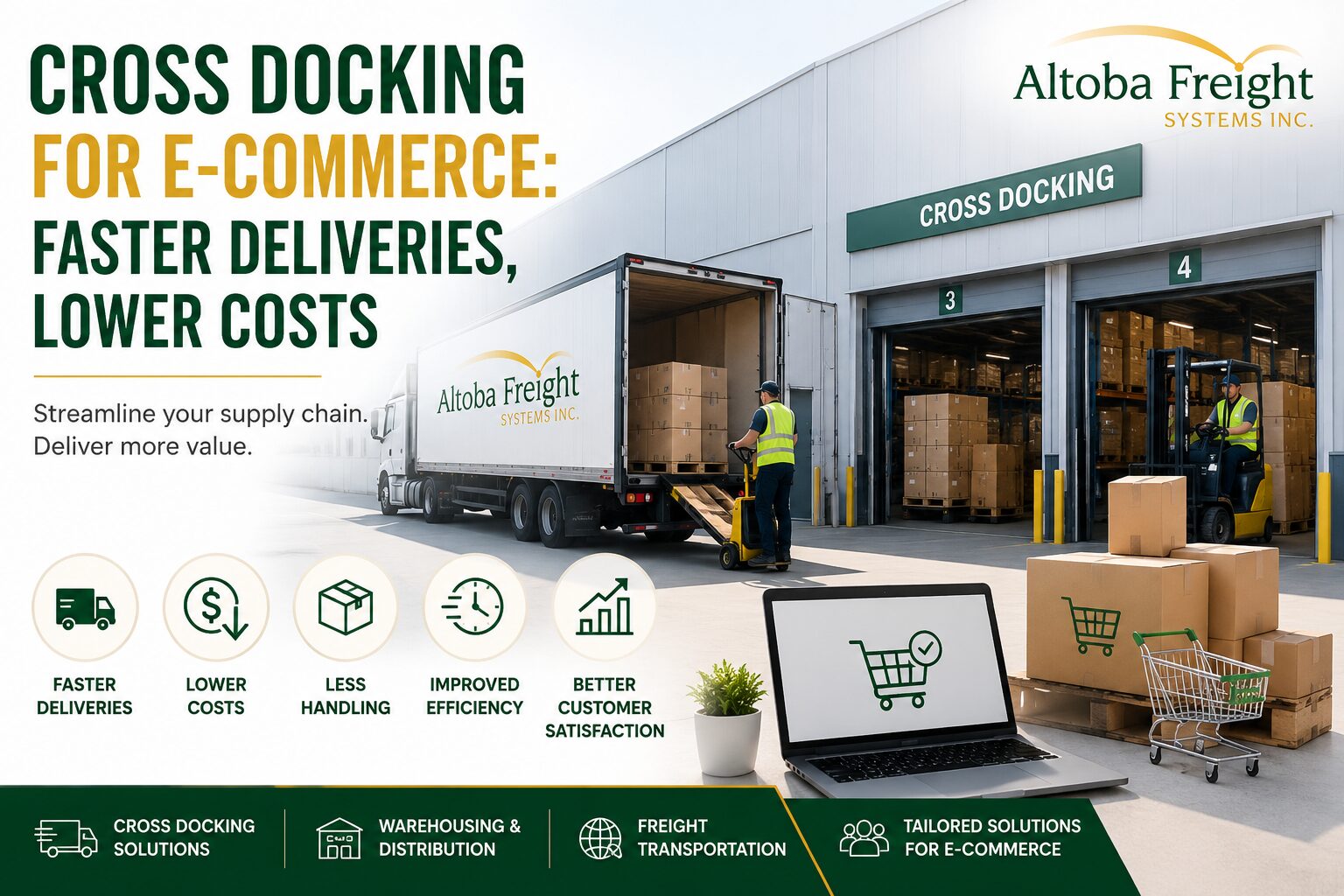
The rapid growth of e-commerce has transformed customer expectations. Today’s online shoppers demand fast shipping, accurate order fulfillment, and affordable delivery options. To stay competitive, businesses need logistics solutions that reduce transit times while keeping operational costs under control. One of the most effective strategies is cross docking.
Cross docking eliminates unnecessary storage by transferring products directly from inbound trucks to outbound vehicles. This streamlined process reduces handling, speeds up deliveries, and helps e-commerce businesses create a more efficient supply chain. For retailers looking to improve customer satisfaction and profitability, cross docking services have become an essential part of modern logistics.
What Is Cross Docking?
Cross docking is a logistics process where incoming freight is unloaded, sorted, and immediately loaded onto outbound trucks with little or no warehouse storage. Instead of storing inventory for days or weeks, products move quickly through a distribution facility and continue toward their final destination.
This approach helps businesses reduce storage expenses while accelerating order fulfillment.
Why Cross Docking Matters for E-commerce
Online shopping continues to grow across Canada, increasing the demand for quicker and more reliable deliveries. Customers now expect same-day or next-day shipping, making efficient logistics more important than ever.
By using cross docking services, e-commerce businesses can:
- Reduce delivery times
- Lower warehousing costs
- Improve inventory flow
- Minimize product handling
- Increase order accuracy
- Meet customer expectations more consistently
These advantages allow retailers to stay competitive in an increasingly demanding marketplace.
Faster Deliveries Improve Customer Satisfaction
Delivery speed has become a major factor influencing purchasing decisions. Customers are more likely to return to businesses that consistently deliver orders on time.
Cross docking reduces delays by eliminating unnecessary warehouse storage. Products move directly from suppliers to delivery vehicles, helping businesses shorten transit times and fulfill customer orders faster.
For e-commerce retailers, faster shipping translates into higher customer satisfaction, better reviews, and increased repeat purchases.
Lower Warehousing Costs
Warehousing represents a significant expense for many businesses. Storage fees, inventory management, labor, and facility maintenance all contribute to operating costs.
Cross docking minimizes these expenses by reducing the amount of inventory stored inside warehouses. Goods spend less time in storage, allowing businesses to operate with lower overhead while maintaining efficient distribution.
Companies that combine cross docking services with strategic warehousing solutions can optimize inventory management while reducing operational costs.
Better Inventory Management
Keeping excessive inventory ties up valuable capital and increases storage costs. Cross docking supports lean inventory practices by moving products quickly through the supply chain.
Real-time inventory visibility allows businesses to replenish stock efficiently while reducing the risk of overstocking or product shortages.
Improved inventory management also helps businesses respond more effectively to seasonal demand and changing customer preferences.
Reduced Product Handling
Every time freight is moved, there is a risk of damage, loss, or shipping errors. Cross docking minimizes product handling by reducing the number of times goods are loaded and unloaded.
Fewer handling stages improve shipment accuracy, reduce damage claims, and lower replacement costs.
This is especially valuable for electronics, consumer goods, food products, and other high-volume e-commerce shipments.
Supports Scalable Business Growth
As online sales increase, businesses need logistics systems that can scale efficiently. Cross docking enables companies to process larger shipment volumes without investing heavily in additional warehouse space.
Whether handling seasonal promotions, holiday demand, or expanding into new markets, cross docking provides the flexibility needed to support long-term business growth.
Technology Makes Cross Docking More Efficient
Modern logistics facilities use advanced technology to improve cross docking operations.
These technologies include:
- Real-time shipment tracking
- Barcode and RFID scanning
- Warehouse Management Systems (WMS)
- Transportation Management Systems (TMS)
- Automated shipment scheduling
- Electronic inventory monitoring
Technology improves shipment visibility, reduces manual errors, and helps businesses make faster logistics decisions.
Why Choose Altoba Freight for Cross Docking?
At Altoba Freight, we provide reliable cross docking services designed to help businesses improve supply chain efficiency while reducing transportation costs. Our experienced logistics team ensures freight moves quickly, safely, and accurately through every stage of the distribution process.
Our services include:
- Cross docking solutions
- Freight consolidation
- Distribution services
- Warehousing support
- Canada-wide freight transportation
- Real-time shipment visibility
- Customized logistics solutions
Whether you’re an e-commerce retailer, manufacturer, wholesaler, or distributor, our logistics experts help optimize your supply chain for faster deliveries and lower operating costs.
Final Thoughts
As customer expectations continue to evolve, businesses need smarter logistics strategies to remain competitive. Cross docking enables e-commerce companies to reduce warehousing costs, improve inventory flow, accelerate deliveries, and increase overall supply chain efficiency.
Partnering with an experienced logistics provider like Altoba Freight gives businesses access to reliable cross docking services, efficient freight management, and customized transportation solutions that support long-term growth. Investing in cross docking today can help your business deliver faster, save more, and exceed customer expectations in 2026 and beyond.
Frequently Asked Questions
What is cross docking in logistics?
Cross docking is a logistics process where freight is transferred directly from inbound shipments to outbound transportation with little or no warehouse storage.
How does cross docking reduce costs?
Cross docking lowers warehousing expenses, reduces inventory storage, minimizes product handling, and improves transportation efficiency.
Is cross docking suitable for e-commerce businesses?
Yes. Cross docking is ideal for e-commerce businesses because it speeds up order fulfillment, reduces delivery times, and improves inventory management.
Which industries benefit from cross docking?
Retail, e-commerce, manufacturing, food distribution, consumer goods, automotive, healthcare, and wholesale businesses all benefit from cross docking services.
Why choose Altoba Freight for cross docking?
Altoba Freight provides reliable cross docking, freight transportation, warehousing support, and customized logistics solutions that help businesses improve efficiency while reducing supply chain costs.